
Car Rental in Hoima
Car Rental in Hoima, hoima is a rapidly growing city in western Uganda and the administrative hub of Hoima District — a region that has gained enormous strategic importance since the discovery of significant oil reserves in the Albertine Graben. Situated approximately 230 kilometres northwest of Kampala, Hoima serves as the gateway to some of Uganda’s most rewarding off-the-beaten-path destinations, including Murchison Falls National Park, Lake Albert’s shoreline, the Budongo Forest Reserve, and the remote Toro-Semliki Wildlife Reserve.
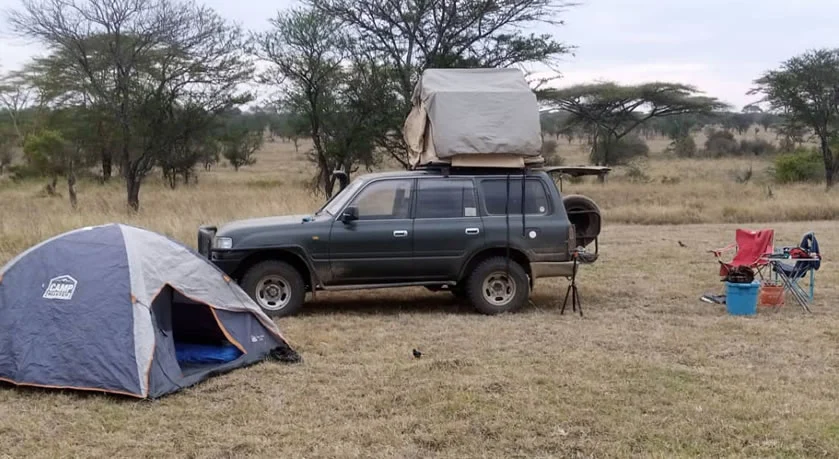
Renting a car in Hoima gives you the freedom to explore western Uganda at your own pace — whether you’re an oil industry professional stationed in the region, a safari traveler seeking to bypass the crowded northern route via Masindi, or a leisure traveler eager to discover the undiscovered shores of Lake Albert and the Rift Valley landscape.
This comprehensive guide covers everything you need to know about car rental in Hoima: the types of vehicles available, trusted rental companies, pricing, road conditions, required documents, tips for driving in the region, and suggested routes and itineraries from Hoima.
| 📍 Quick Facts: Hoima at a Glance |
| • Location: Hoima District, Western Uganda — approx. 230 km NW of Kampala
• Elevation: ~1,100 m above sea level • Key Industries: Oil & gas (Albertine Graben), agriculture, fishing (Lake Albert) • Nearest Airstrip: Hoima Airport (Kabaale International Airport under development) • Gateway to: Murchison Falls NP, Lake Albert, Budongo Forest, Toro-Semliki WR • Road Condition: Mix of tarmac (Kampala–Hoima highway) and murram/dirt laterite roads |
Why Rent a Car in Hoima?
Hoima is one of Uganda’s most strategically positioned cities for road travel. Whether you’re based here for work or passing through on a self-drive safari, having your own vehicle unlocks access to destinations that public transport simply cannot reach.
1. Access to Remote Safari Destinations
From Hoima, you can reach the northern gate of Murchison Falls National Park in under three hours. The drive through Masindi and Kichumbanyobo Gate is one of Uganda’s most scenic routes — passing through savannah, papyrus wetlands, and eventually the vast plains of Africa’s largest national park. Without a rental car, reaching these destinations independently is near-impossible.
2. Oil Industry & Business Travel
The Albertine Graben — stretching west and north of Hoima — is the epicentre of Uganda’s oil development. Companies including TotalEnergies, CNOOC, and various service contractors operate fleets in the region. Individual consultants, government officials, and NGO workers often need flexible short-term rentals to access remote field sites and communities around Kabaale, Buliisa, and Pakwach.
3. Exploring Lake Albert
Lake Albert’s Ugandan shoreline stretches for over 160 kilometres. Towns like Butiaba, Wanseko, and Ntoroko offer stunning Rift Valley scenery, local fishing communities, and increasingly important eco-tourism sites. Reaching them independently requires a reliable 4×4 vehicle; no regular public transport covers these routes.
4. Budongo Forest Reserve
The Budongo Forest is one of Uganda’s largest and most biodiverse tropical forests, home to habituated chimpanzee groups, Nile red colobus monkeys, and over 360 bird species. It sits between Hoima and Murchison Falls, making it a natural add-on for any western Uganda road trip.
5. Freedom and Flexibility
Unlike guided tours that follow fixed schedules, a self-drive rental lets you stop at roadside markets, photograph the Rift Valley escarpment at sunset, linger at a fishing village on Lake Albert, or simply take an unmarked track down to the lakeshore — all on your own terms.
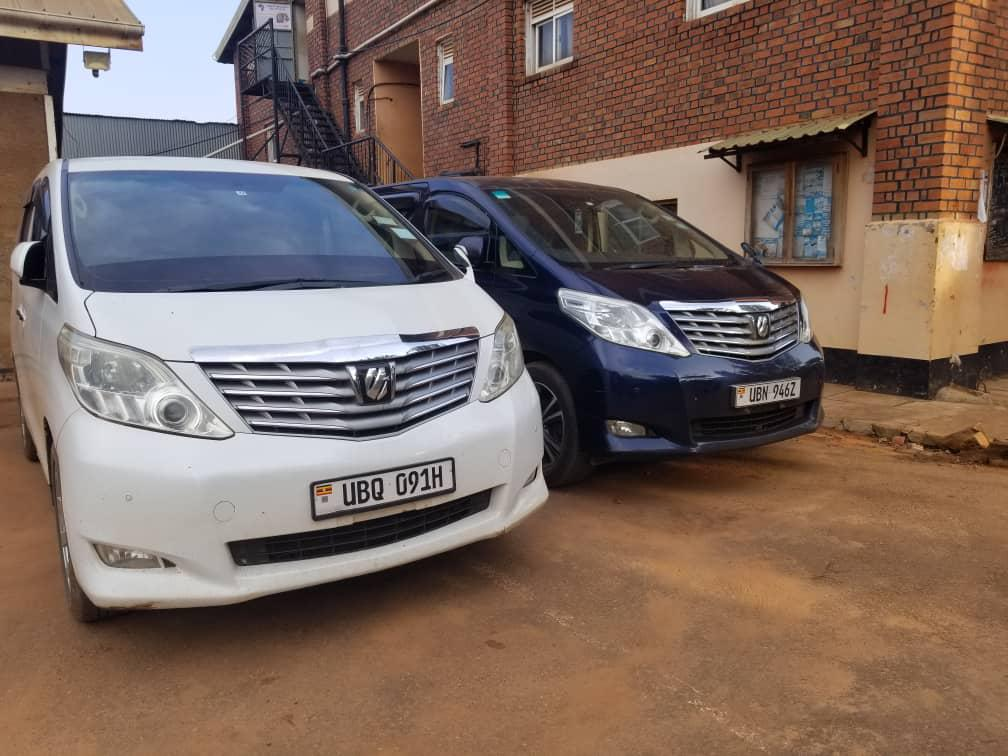
Types of Vehicles Available for Rental in Hoima
Car rental options in Hoima are available through local agencies, Kampala-based companies that offer pick-up/drop-off in Hoima, and a small number of regional operators. Below is a breakdown of the most commonly available vehicle categories.
1. Economy Cars — Toyota Vitz / Premio / Axio
Small saloon cars are available for use within Hoima town and for travel along the main tarmac highway between Kampala and Hoima. They are unsuitable for safari destinations or murram roads but are affordable for in-town errands, business meetings, and airport transfers.
- Best for: Business meetings in town, airport transfers, in-city movement
- Not recommended for: Lake Albert tracks, safari parks, off-road routes
- Daily rate: USD 40–60 (self-drive) | USD 55–80 (with driver)
2. Mid-Range SUVs — Toyota RAV4 / Rav4 Diesel / Nissan X-Trail
These compact SUVs offer a good balance between comfort and light off-road capability. They handle the main highway and occasional graded murram roads with ease but struggle on deeply rutted tracks, river crossings, and remote laterite roads during the rainy season.
- Best for: Hoima–Kampala runs, Budongo Forest day trips, dry-season Murchison visits
- Ground clearance: moderate — sufficient for light to moderate gravel roads
- Daily rate: USD 60–85 (self-drive) | USD 80–110 (with driver)
3. Toyota Land Cruiser Prado (TX / VX)
The Land Cruiser Prado is the most popular vehicle for western Uganda self-drive safaris. It combines genuine off-road capability with a comfortable interior, making it ideal for multi-day trips to Murchison Falls, Lake Albert, Toro-Semliki, and beyond. The 3.0L diesel engine handles long distances economically.
- Best for: Murchison Falls NP, Lake Albert shores, Budongo Forest, Toro-Semliki
- Seating: 5–7 passengers | Luggage: large boot + roof rack
- Features: 4WD high/low, diff lock, high ground clearance, AC, USB charging
- Daily rate: USD 100–130 (self-drive) | USD 130–170 (with driver)
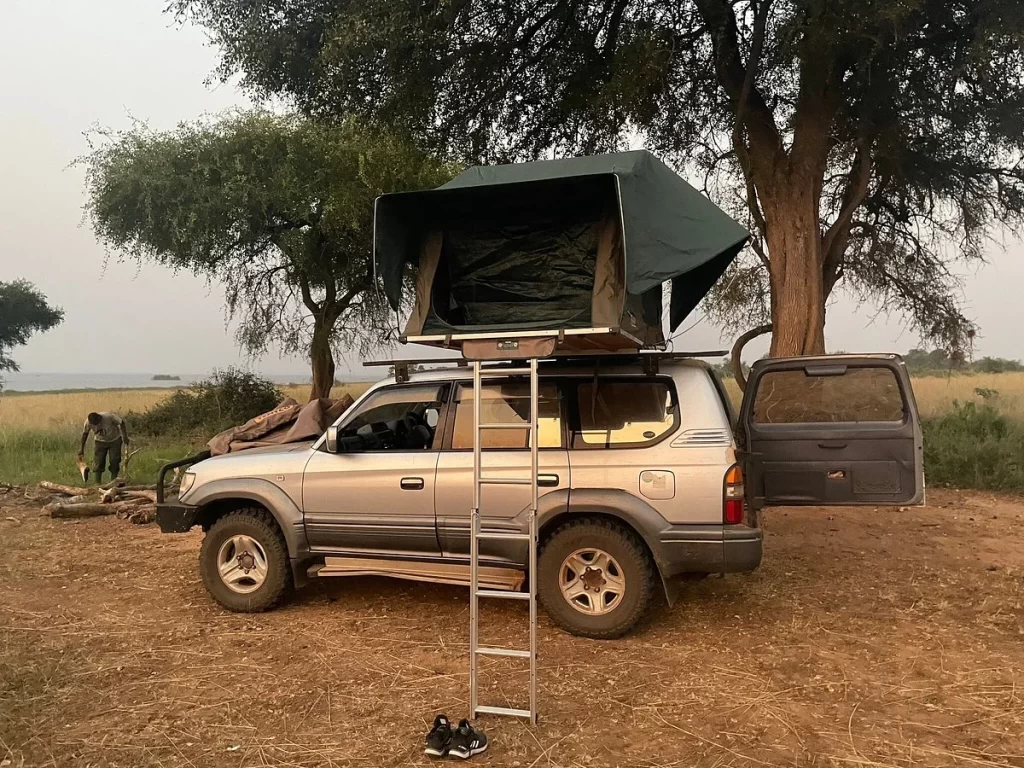
4. Toyota Land Cruiser 76/78/79 Series (Hardtop / Troopcarrier)
For the most demanding terrain — remote Albertine Rift Valley tracks, northern Murchison game drives during the rainy season, and bush camping routes — the Land Cruiser 76 or 79 series is the gold standard. These heavy-duty workhorses are commonly used by NGOs, oil companies, and serious overlanders.
- Best for: Rainy season travel, remote oil field routes, extended overland expeditions
- Seating: 9 (Troopcarrier) or 3 (hardtop utility) | Body: steel hardtop or canvas
- Features: Live axle, 3-diff lock, 4WD high/low, external fuel tank, snorkel option
- Daily rate: USD 120–160 (self-drive) | USD 150–200 (with driver)
5. Toyota Hilux Double Cab (4×4)
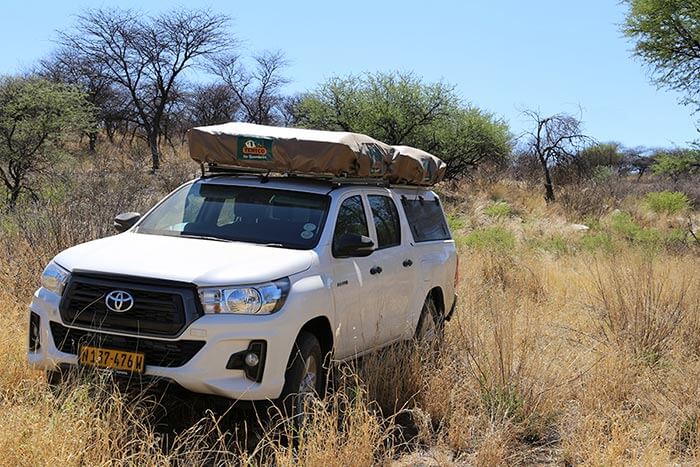
The Hilux pickup is a favourite for travellers who want both cargo capacity and off-road performance. It is widely used by oil field workers and can be fitted with a rooftop tent for self-sufficient safari camping.
- Best for: Rooftop tent camping, cargo hauling, NGO fieldwork, oil sector
- Payload: ~1,000 kg | Rooftop tent: fits 2 adults comfortably
- Daily rate: USD 100–140 (self-drive) | USD 130–175 (with driver)
6. Safari Pop-Up Roof Land Cruiser
A specially modified Land Cruiser fitted with a pop-up roof for game viewing — the classic Ugandan safari vehicle. Some rental companies in Kampala will deliver these to Hoima for customers starting western Uganda safari routes from the city.
- Best for: Murchison Falls NP game drives, photography safaris, guided tours
- Features: Pop-up roof, bench seats, camera mounts, radio comms
- Daily rate: USD 140–200 (self-drive) | Typically rented with driver/guide
Car Rental Pricing in Hoima — 2027 Rate Guide
Prices below are indicative 2026 market rates in US dollars. Actual quotes may vary based on rental duration, fuel type (petrol vs. diesel), optional extras (rooftop tent, camping gear, GPS), and seasonal demand.
| Vehicle Type | Self-Drive / Day | With Driver / Day | Min. Rental Period |
| Toyota Vitz / Premio | USD 40–60 | USD 55–80 | 1 day |
| Toyota RAV4 / Nissan X-Trail | USD 60–85 | USD 80–110 | 1 day |
| Toyota Land Cruiser Prado | USD 100–130 | USD 130–170 | 2 days |
| Land Cruiser 76 / 79 Series | USD 120–160 | USD 150–200 | 2 days |
| Toyota Hilux 4×4 Double Cab | USD 100–140 | USD 130–175 | 2 days |
| Safari Pop-Up Roof Land Cruiser | USD 140–200 | USD 160–210 | 2 days |
| 💡 What’s Usually Included vs. Excluded |
| INCLUDED: Vehicle insurance (3rd party), valid service certificate, comprehensive vehicle inspection, 24/7 emergency support line, road rescue within Uganda
EXCLUDED: Fuel (you pay for all fuel consumed), national park entry fees, toll fees, driver’s accommodation & meals (for chauffeur-driven rentals), extra mileage beyond agreed daily limit, rooftop/ground tent add-ons (charged separately) OPTIONAL EXTRAS: GPS tracker/navigation device (+USD 5–10/day), camping kit — stove, sleeping bag, mattress (+USD 15–25/day), rooftop tent (+USD 25–35/day), high-lift jack & recovery gear (+USD 10/day) |
Car Rental Requirements in Hoima
To rent a car in Hoima or anywhere else in Uganda, you’ll need to satisfy several standard documentation and eligibility requirements. These apply regardless of whether you are renting from a Kampala agency or a local Hoima operator.

Documents Required
| Document | Details / Notes |
| Valid Passport | Must be valid for at least 6 months beyond your planned rental period |
| Uganda Tourist/Business Visa | e-Visa obtained at visas.immigration.go.ug; or EAC single tourist visa |
| Valid Driver’s Licence | Your home country licence is accepted if in English; otherwise an IDP is required |
| International Driving Permit (IDP) | Required if your licence is not in English (issued by your home country’s AA) |
| Credit/Debit Card or Cash | Deposit typically USD 300–500; most agencies accept mobile money for locals |
| Rental Agreement | Read the T&Cs carefully — note fuel policy, mileage cap, and damage liability |
Minimum Age & Experience Requirements
- Minimum age: 23 years (some companies require 25 for 4×4 vehicles)
- Minimum driving experience: 2–3 years (full licence, not a learner’s permit)
- For self-drive 4×4 vehicles: prior experience driving manual transmission 4WD is strongly recommended
- For chauffeur-driven rentals: no driving experience required from the client
| ⚠️ Important: Self-Drive Restrictions in Uganda |
| Uganda does NOT restrict self-drive rentals to Ugandan citizens — foreign tourists and expats with valid licences can legally self-drive rental vehicles anywhere in the country.
However, many rental companies will NOT allow self-drive in national parks during heavy rainy season (March–May, October–November) — a driver/guide may be mandatory for these periods. Night driving is strongly discouraged due to road safety risks — most rental agreements include a clause against driving between 9 PM and 6 AM. If you plan to cross into Kenya, Rwanda, or Tanzania, you MUST obtain pre-approval from the rental company and carry all cross-border documents (see the Cross-Border section below). |
Where to Book Your Car Rental in Hoima
Car rental services available in Hoima come from three main categories: national companies based in Kampala with Hoima delivery, locally based operators, and hotel-affiliated transport services.
1. Kampala-Based National Operators (Recommended for Quality & Reliability)
The most reliable car rental companies serving Hoima operate from Kampala. They typically offer higher vehicle standards, comprehensive insurance coverage, 24/7 emergency support, and clear rental agreements. They will deliver the vehicle to your location in Hoima (delivery fee applies — typically USD 80–120 one-way from Kampala).
- Marriott Safaris Africa — Specialises in self-drive and chauffeur-driven 4×4 rentals for western Uganda safaris; strong fleet of Land Cruiser Prados, Hilux, and pop-up roof safari vehicles; competitive daily rates with inclusive packages
- Safari Car Rental Uganda — Kampala-based, wide fleet selection including RAV4s and Land Cruisers
- Benmar Safaris — Reputable for corporate and NGO vehicle hire in the Albertine region
- Car Hire Uganda — Budget-friendly option for economy and mid-range SUV categories
2. Local Hoima Taxi & Transport Services (Budget Option)
Hoima town has a functioning boda-boda (motorcycle taxi) and taxi-van network for local movement. Several local drivers also offer informal car hire — usually saloon cars or older Land Cruisers at lower rates. Caution: local informal hirers rarely carry adequate third-party insurance or provide written rental agreements. For safari travel or cross-border trips, always use a registered company.
3. Hotel Transport Desks
Several of Hoima’s mid-range hotels — including Hoima Resort Hotel, Bunyoro Royale Hotel, and Kolping Hotel Hoima — offer in-house car hire or can connect you with trusted local drivers. These services are generally adequate for in-town use and airport transfers but may not have the vehicle quality or legal documentation needed for park entry or cross-border travel.
Road Conditions Around Hoima
Understanding the road network around Hoima is essential for choosing the right vehicle and planning realistic travel times.
Kampala to Hoima (Approx. 230 km)
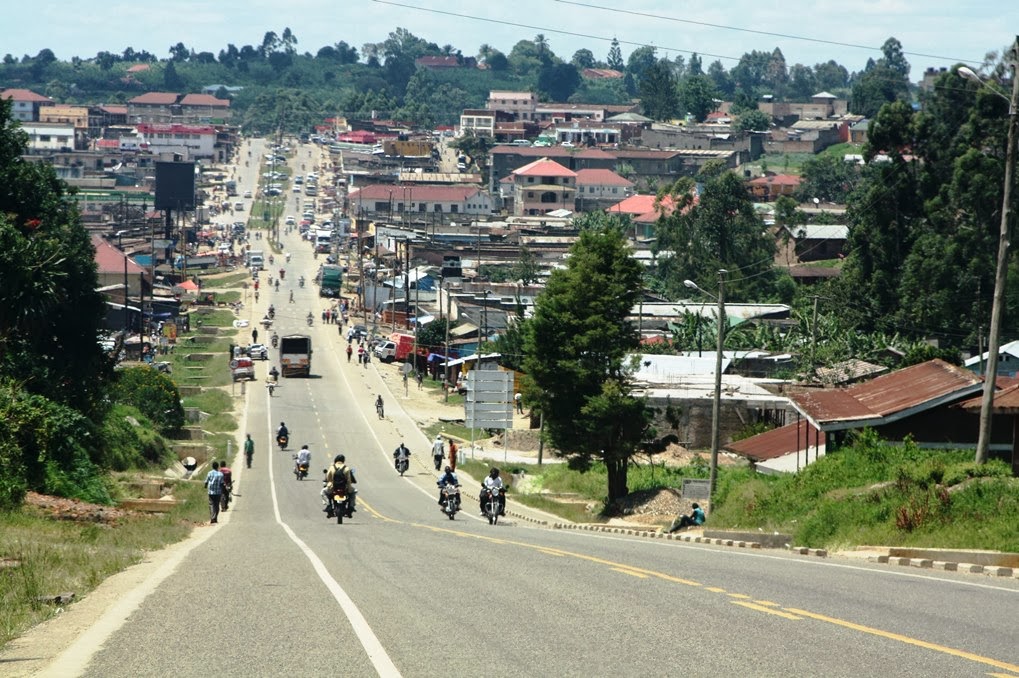
The main Kampala–Hoima highway via Mityana and Kiboga is largely tarmac, though sections between Kiboga and Hoima have patches of poor surface. In dry conditions, expect 4–5 hours by car. During heavy rain, add 1–2 hours. A Toyota RAV4 or sedan is sufficient for this route.
Hoima to Murchison Falls National Park (Approx. 100–130 km)
The route from Hoima to Murchison Falls via Masindi and Kichumbanyobo Gate passes through Budongo Forest. The main road is partly tarmac, partly graded murram. From Kichumbanyobo Gate onwards, roads are murram and become deeply rutted during the rains. A Land Cruiser Prado or equivalent 4×4 is recommended. Allow 2.5–3.5 hours.
Hoima to Lake Albert (Butiaba / Wanseko — Approx. 50–80 km)
The descent from Hoima to Lake Albert’s shoreline drops more than 700 metres through the Rift Valley escarpment. The road to Butiaba is partly tarmac, but the tracks to fishing villages beyond Wanseko are unimproved laterite roads that require a 4×4 in all seasons. The scenery is extraordinary — the drop from the escarpment to the flat lakeshore is one of Uganda’s great drives.
Hoima to Toro-Semliki Wildlife Reserve (Approx. 120 km via Ntoroko)
Toro-Semliki is accessed via Fort Portal or via the remote Ntoroko route along Lake Albert’s southern shore. Either route requires a 4×4. The Ntoroko route is adventurous and rarely travelled — expect a full half-day drive from Hoima on rough laterite.
Hoima to Fort Portal (Approx. 130 km)
A partly tarmacked highway links Hoima to Fort Portal via Kyenjojo. This route is manageable in a RAV4 or larger vehicle and opens up connections to the Rwenzori Mountains, Kibale National Park, and the Queen Elizabeth–Ishasha sector.
| Route | Distance | Est. Drive Time | Road Type | Min. Vehicle |
| Kampala → Hoima | ~230 km | 4–5 hours | Tarmac / some murram | Sedan / RAV4 |
| Hoima → Murchison Falls (via Masindi) | ~100–130 km | 2.5–3.5 hrs | Tarmac + murram | Prado / 4×4 |
| Hoima → Lake Albert (Butiaba) | ~50 km | 1–1.5 hrs | Tarmac + laterite | Prado / 4×4 |
| Hoima → Lake Albert (Wanseko / remote) | ~80 km | 2–3 hrs | Murram / dirt | Land Cruiser 76/79 |
| Hoima → Fort Portal | ~130 km | 2.5–3 hrs | Partly tarmac | RAV4 / Prado |
| Hoima → Toro-Semliki (Ntoroko route) | ~120 km | 3.5–5 hrs | Murram / laterite | Land Cruiser 4×4 |
Sample Road Trip Itineraries from Hoima
Itinerary 1: 3-Day Murchison Falls Express
A focused three-day route from Hoima into Murchison Falls National Park — perfect for oil sector workers on a long weekend or travellers with limited time.
- Day 1: Hoima → Masindi → Budongo Forest (chimp tracking, birding) → Murchison Falls NP (Kichumbanyobo Gate → Pakuba Lodge area). Overnight: Pakuba Safari Lodge or Paraa area camps.
- Day 2: Full day in Murchison Falls NP. Morning: launch cruise from Paraa to the falls base — see hippos, crocodiles, elephants at the Nile. Afternoon: North Bank game drive for lions, giraffes (Rothschild’s), elephants. Overnight: Paraa Safari Lodge or Nile Safari Camp.
- Day 3: Pre-dawn top-of-falls hike (sunrise at the falls is spectacular). Mid-morning: return drive via Masindi and Hoima. Arrive Hoima late afternoon.
- Vehicle recommended: Toyota Land Cruiser Prado (self-drive) or Hilux 4×4.
Itinerary 2: 2-Day Lake Albert Discovery
A leisurely two-day route from Hoima down to Lake Albert’s shore — combining Rift Valley scenery, local culture, and fishing village experiences.
- Day 1: Hoima → Butiaba (descent via escarpment road — spectacular views). Explore Butiaba’s historic steamship pier, once the hub of Lake Albert navigation. Lunch at a lakeside restaurant. Afternoon: drive north to Wanseko, watch the evening fishing boats depart. Overnight: local guesthouse in Wanseko or return to Hoima.
- Day 2: Sunrise on Lake Albert (one of Uganda’s most underrated experiences). Morning: drive back up the escarpment, stopping at viewpoints. Option: divert to Budongo Forest for an afternoon chimp trek. Return to Hoima by evening.
- Vehicle recommended: Toyota Land Cruiser Prado or Land Cruiser 76 Series.
Itinerary 3: 5-Day Western Uganda Grand Loop
A comprehensive five-day loop from Hoima covering Murchison Falls, Budongo Forest, Lake Albert, and Fort Portal — ideal for travellers with a week in the region.
- Day 1: Hoima → Masindi → Budongo Forest (chimp tracking) → Murchison Falls NP (Kichumbanyobo Gate). Overnight: Nile Safari Camp.
- Day 2: North Bank game drive + Nile launch cruise to the falls. Full day in the park. Overnight: Paraa area.
- Day 3: Murchison Falls NP → Hoima → Butiaba / Lake Albert shoreline. Afternoon: lake and escarpment. Overnight: return to Hoima.
- Day 4: Hoima → Kyenjojo → Fort Portal. En route: Toro Kingdom cultural sites and Rwenzori foothills views. Overnight: Fort Portal.
- Day 5: Fort Portal → Kibale National Park (optional chimp trek) → return to Hoima via Kyenjojo or direct highway.
- Vehicle recommended: Toyota Land Cruiser Prado (self-drive) — the full loop covers approx. 700 km of mixed roads.
Cross-Border Car Rental from Hoima
Hoima’s location in western Uganda makes it a possible starting point for cross-border overland journeys. The most common cross-border routes from western Uganda include entry into Rwanda (via Kisoro or Katuna), Tanzania (via Mutukula), Democratic Republic of Congo (via Mpondwe/Bunagana, for experienced travellers), and Kenya (via Malaba/Busia — typically via Kampala).
Before attempting any cross-border trip, you MUST confirm cross-border authorisation with your rental company. Unauthorised cross-border driving will void your insurance and potentially result in vehicle confiscation.
Essential Cross-Border Documents
- Vehicle logbook (original) — proof of ownership or lease
- COMESA Yellow Card Insurance — covers third-party liability across 23 COMESA member states including Uganda, Kenya, Tanzania, Rwanda, Zambia
- Temporary Import Permit (TIP) — required when entering a new country with a foreign-registered vehicle; issued at the border
- Rental authorisation letter — on company letterhead, authorising you to drive and cross borders with the vehicle
- Valid passport and visa — ensure your passport is valid for all countries you will enter
- International Driving Permit (IDP) — required in some countries if your licence is not in English
| 🚩 DRC Safety Advisory |
| Travel to the DRC border regions (Mpondwe/Bunagana/Kasindi) is currently NOT recommended for leisure travellers due to ongoing security concerns in eastern DRC.
Oil sector workers travelling to DRC field sites should use company-arranged security-cleared transport, not leisure rental vehicles. Always check your government’s travel advisory for DRC before planning any travel near the border. |
Driving Safety Tips in Hoima & Western Uganda
On the Road
- Drive on the LEFT-hand side of the road (Uganda follows the British driving convention)
- Speed limits: 80 km/h on main highways; 50 km/h in urban areas; reduce to 30 km/h on murram/dirt roads
- Boda-bodas (motorcycle taxis) are abundant in Hoima and frequently unpredictable — always give motorcycles extra clearance
- Speed bumps (sleeping policemen) are extremely common in Ugandan towns — often unmarked; approach all town entries at low speed
- Fuel: ensure you fill up in Hoima before heading into remote areas; petrol and diesel are available at TotalEnergies, Shell, and Vivo Energy stations in Hoima town
- Night driving: avoid driving after dark outside towns — pedestrians, livestock, and cyclists with no reflective clothing use the roads widely
Vehicle & Mechanical Preparedness
- Inspect the vehicle thoroughly before departure — document any pre-existing scratches, dents, or damage with photos
- Check tyre condition including the spare; ensure the vehicle carries a high-lift jack and tow rope for remote routes
- Carry at least 10–20 litres of reserve fuel in a jerry can for remote routes (Lake Albert, Toro-Semliki)
- Download offline maps (Maps.me or Google Maps offline) — mobile data connectivity is limited in remote areas west of Hoima
- Carry a basic first-aid kit and drinking water (minimum 4 litres per person for full-day remote trips)
Security
- Hoima town is generally safe; standard urban precautions apply (lock valuables in the boot, avoid displaying cameras/laptops in open windows)
- Remote oil field areas along the Albert Nile may have security checkpoints — cooperate, carry your passport, and be patient
- Always share your planned route and expected return time with someone at your hotel or your rental company
Fuel Stations in Hoima
Hoima is reasonably well-served by fuel stations for a western Uganda city. Fuel availability and quality are generally consistent at branded stations.
| Station | Fuel Available | Location | Notes |
| TotalEnergies Hoima | Petrol, Diesel | Main road, Hoima town centre | Reliable; usually has diesel; 24hr service on busy days |
| Shell Hoima | Petrol, Diesel | Kampala Road, Hoima | Good quality fuel; convenience store attached |
| Vivo Energy (Engen) | Petrol, Diesel | Hoima–Masindi Road | Convenient for northbound travellers |
| MOGAS | Petrol, Diesel | Various locations | Locally operated; adequate quality |
| Rural pumps (Masindi, Butiaba) | Diesel (limited) | Enroute to Lake Albert/Murchison | Availability unreliable — fill up in Hoima first |
Fuel prices in Uganda fluctuate with international oil prices. As of 2026, expect to pay approximately UGX 5,800–6,400 per litre for petrol and UGX 5,500–6,200 per litre for diesel. Always fill the tank full in Hoima before heading to Murchison Falls or Lake Albert areas.
Where to Stay in Hoima
Hoima has a developing accommodation sector driven by oil sector demand. Options range from budget guesthouses to comfortable mid-range hotels. There are currently no international luxury brands in Hoima, though the growth of the oil industry is expected to change this.
Mid-Range Hotels
- Hoima Resort Hotel — the most established hotel in Hoima; good restaurant, reliable WiFi, parking; popular with NGO and oil company staff
- Bunyoro Royale Hotel — comfortable rooms in a quieter setting; conference facilities; often used for government events
- Kolping Hotel Hoima — part of the Kolping network; clean rooms, restaurant, reasonable rates; good option for budget-minded business travellers
- Eagles Nest Hotel Hoima — locally owned; good value with basic amenities; parking available
Budget Guesthouses
- Several guesthouses cluster around the main Hoima roundabout and Kampala Road offering rooms from UGX 50,000–120,000 per night
- Amenities vary significantly — confirm hot water, WiFi, and security before booking
En Route Accommodation (Safari Lodges)
- Masindi Hotel (Masindi) — a historic and characterful hotel between Hoima and Murchison Falls; Hemingway reportedly stayed here
- Nile Safari Camp (Murchison Falls) — upscale tented camp on the Nile; excellent if you’re extending into the park
- Pakuba Safari Lodge (Murchison Falls) — mid-range lodge inside the park on the Nile bank; reliable and well-positioned
Frequently Asked Questions — Car Rental in Hoima
1. Can foreigners rent a car in Hoima, Uganda?
Yes. Foreigners can legally rent and self-drive vehicles in Uganda provided they hold a valid driver’s licence from their home country (in English) or an International Driving Permit. There are no nationality-based restrictions on car rental.
2. Is Hoima safe for self-drive travel?
Hoima town and the main roads into Murchison Falls and Lake Albert are generally safe for self-drive travel. The main risks are road conditions (potholes, murram roads, unpredictable local driving behaviour) rather than security threats. Always drive during daylight hours and inform someone of your planned route.
3. Do I need a 4×4 to travel from Hoima to Murchison Falls?
A 4×4 vehicle with good ground clearance is strongly recommended for travel to Murchison Falls, especially during the rainy seasons (March–May and October–November). A Land Cruiser Prado, Land Cruiser 76/79, or Hilux 4×4 is ideal. A RAV4 can manage in dry conditions but may struggle on deep murram inside the park.
4. How do I get my rental vehicle delivered to Hoima?
Most Kampala-based rental companies offer vehicle delivery to Hoima for an additional fee of approximately USD 80–120 (one-way from Kampala, around 230 km). Confirm delivery logistics when booking — specify your hotel address and preferred delivery time.
5. Are there car rental agencies based in Hoima itself?
There are a small number of local drivers and informal operators offering car hire in Hoima, but no major franchised car rental offices currently operate from Hoima town. The most reliable approach is to book through a Kampala-based company with Hoima delivery, or to pick up the vehicle from Kampala and drive to Hoima yourself.
6. What is the best time of year to visit Hoima and the surrounding attractions?
The best time for self-drive travel from Hoima is during the dry seasons: June–August and December–February. Roads are more passable, game viewing in Murchison Falls is excellent (animals concentrate around water sources), and the Budongo Forest chimps are active. Avoid heavy rains (April–May) for road safety — certain tracks to Lake Albert and Toro-Semliki become impassable.
7. Can I rent a car in Hoima and drive to Rwanda or Kenya?
Yes, cross-border rentals are possible but must be pre-arranged with the rental company. You will need a COMESA Yellow Card (insurance), a vehicle authorization letter, a Temporary Import Permit at the border, and valid visas for all countries you intend to enter. Confirm all requirements with your rental company at the time of booking.
8. What is the typical fuel cost for a trip from Hoima to Murchison Falls?
A round trip from Hoima to Murchison Falls (approximately 200–260 km depending on your route and movements inside the park) will consume roughly 25–40 litres of diesel in a Land Cruiser Prado. At 2026 rates of approximately UGX 5,500–6,200/litre, budget UGX 140,000–250,000 (approximately USD 37–66) for fuel. Add 20–30% for game drives inside the park.
9. Do rental cars come with GPS or navigation?
Most rental vehicles do not include GPS as standard. Bring your own smartphone with Google Maps or Maps.me downloaded for offline use. Your rental company can often provide a GPS device for an additional USD 5–10 per day. Note that mobile data coverage weakens significantly west of Hoima — download offline maps in Kampala or Hoima before departing.
10. What is the difference between a self-drive and a chauffeur-driven rental?
A self-drive rental means you drive the vehicle yourself. You need a valid licence and take responsibility for navigating and driving safely. A chauffeur-driven rental includes a professional driver (and sometimes a guide) who knows the roads, park regulations, and local conditions. For first-time visitors to western Uganda, a chauffeur-driven option significantly reduces stress and increases safety, especially for Murchison Falls park drives.
| Ready to Explore Western Uganda?
Book your car rental in Hoima with 4×4 Car rental — we deliver reliable 4×4 vehicles to your location, provide comprehensive insurance, and offer 24/7 road support across Uganda. |
