
4×4 Car Rental in Uganda with Drop-Off in Rwanda
4×4 Car Rental in Uganda with Drop-Off in Rwanda, Planning a self-drive safari through Uganda with a cross-border drop-off in Rwanda is one of the most rewarding travel experiences in East Africa. The route takes you through some of the continent’s most dramatic landscapes — from the sprawling savannah of Queen Elizabeth National Park and the misty forests of Bwindi Impenetrable National Park to the rolling hills of Rwanda and the cool shores of Lake Kivu.

Renting a 4×4 vehicle for this journey is not just recommended — it is essential. The roads linking Uganda’s national parks and the mountain passes into Rwanda demand a capable off-road vehicle with high ground clearance, four-wheel drive capability, and reliable navigation tools. This guide walks you through everything you need to know: choosing the right vehicle, understanding cross-border requirements, rental costs, drop-off procedures, and tips for a smooth, safe journey.
Why You Need a 4×4 for Uganda to Rwanda Travel
The terrain between Uganda and Rwanda is dramatically varied. While Kampala and Kigali are connected by reasonably paved highways, the detours into Uganda’s national parks and border highlands make a standard sedan or minivan completely inadequate. Here is why a 4×4 is the only sensible choice:
- Unpaved Park Tracks: National parks like Bwindi, Queen Elizabeth, and Mgahinga have unpaved, deeply rutted access roads that become impassable mud in the rainy season without four-wheel drive.
- River Crossings and Drainage Gullies: Several routes include shallow river crossings or drainage channels that require high clearance and traction control.
- Mountain Passes into Rwanda: The southwestern Uganda-Rwanda border near Katuna/Gatuna includes steep mountain roads where grip and power are critical.
- Remote Breakdown Safety: A 4×4 from a reputable rental company is typically newer, better maintained, and equipped with a spare tire, jack, and recovery kit for emergencies in remote areas.
- River Nile Bridges and Ferries: Depending on your route, you may cross the Kazinga Channel ferry or Nile crossings where a dependable vehicle is essential.
Best 4×4 Vehicles for Uganda-Rwanda Rentals
Not all 4×4 vehicles are equal. Car rental companies in Uganda offer several models suitable for cross-border safari travel. The choice depends on your party size, budget, and the specific routes you plan to take.
| Vehicle | Seats | Best For | Daily Rate (USD) |
| Toyota Land Cruiser V8 | 5–7 | Long safaris, large groups | $150 – $220 |
| Toyota Land Cruiser Prado | 5 | Couples & small groups | $110 – $160 |
| Toyota RAV4 (AWD) | 5 | Budget travel, paved routes | $70 – $100 |
| Toyota Hilux (4×4 Double Cab) | 5 | Luggage-heavy trips | $90 – $130 |
| Land Rover Defender | 5–8 | Deep-bush off-road routes | $130 – $200 |
| Nissan Patrol | 7–9 | Large groups, long distances | $120 – $170 |
*Rates are approximate and vary by rental company, season, and whether a driver is included.
Most Popular Rental: Toyota Land Cruiser V8
The Toyota Land Cruiser V8 (200 Series) remains the gold standard for Uganda-Rwanda cross-border safaris. With seating for up to 7 passengers, a powerful V8 engine, air conditioning, and exceptional off-road capability, it handles Bwindi’s muddy gorilla trekking roads and the steep Kabale-Katuna highland route with ease. Most rental units come pop-up roof options for game viewing, a fridge, and a full emergency kit.
Budget Choice: Toyota RAV4 AWD
For travelers sticking to paved roads and visiting parks with well-maintained tracks, the Toyota RAV4 AWD offers a budget-friendly alternative. It is not suitable for Bwindi’s deepest tracks or wet-season park roads but handles the Kampala-Kabale-Kigali highway route well. Note: some Uganda national park entry points will not permit RAV4s on their internal tracks during the rainy season.

Cross-Border Requirements: Uganda to Rwanda
Crossing from Uganda into Rwanda with a rental vehicle requires preparation. Both countries are part of the East African Community (EAC), and cross-border travel is generally well-organized, but rental documentation is essential.
Required Documents
- Valid Passport with Rwanda visa or EAC Tourism Visa: Citizens of many countries can obtain a single East Africa Tourist Visa (USD $100) covering Uganda, Rwanda, and Kenya, valid for 90 days.
- Vehicle Cross-Border Letter: Your rental company must issue an official cross-border permission letter on company letterhead, authorizing you to take the vehicle into Rwanda. This is non-negotiable.
- Vehicle Logbook / Registration Papers: Original vehicle registration or a certified copy, confirming the rental company owns the vehicle.
- Third-Party Insurance covering Rwanda: Ugandan insurance does not automatically extend to Rwanda. Purchase a COMESA Yellow Card from your rental company or at the border (approximately USD $20–40 for 30 days).
- International Driving Permit (IDP): Strongly recommended alongside your national driver’s license. Rwanda recognizes IDPs issued under the 1949 or 1968 Vienna Convention.
- Car Rental Agreement: Keep your rental contract accessible at the border.
Border Crossing Points
There are two main border crossing points between Uganda and Rwanda:
- Katuna/Gatuna (Most Common): Located southwest of Kabale, Uganda, this is the primary crossing for travelers coming from southwestern Uganda’s national parks. It operates 24 hours but is busiest 8am–6pm. The crossing is efficient, typically taking 30–60 minutes.
- Cyanika Border Post: A less-used crossing near Kisoro, Uganda, popular for travelers coming from Mgahinga Gorilla National Park. This route offers spectacular mountain scenery but the road on the Ugandan side is steep and requires a capable 4×4.
Drop-Off in Rwanda: What You Need to Know
Dropping off a Uganda-registered 4×4 in Rwanda is a service offered by most established car rental companies in Kampala and Entebbe. It is a one-way rental arrangement, and specific terms apply.
One-Way Drop-Off Fee
Most car rental companies charge a one-way drop-off fee for returning the vehicle in Rwanda instead of Uganda. This fee covers the cost of positioning the vehicle back to Uganda (either by driver or transport). Typical one-way drop-off fees range from USD $150 to $350, depending on the drop-off city in Rwanda and the rental company.
Common Drop-Off Locations in Rwanda
- Kigali (Most Common): Most renters drop off at the rental company’s Kigali office or at Kigali International Airport. This is the most convenient and cheapest drop-off option.
- Musanze / Ruhengeri: Popular for travelers who end their trip at Volcanoes National Park for gorilla trekking.
- Gisenyi / Rubavu: On the shores of Lake Kivu, near the Congo border. A scenic end point for longer itineraries.
- Huye (Butare): In southern Rwanda, near the Nyungwe Forest National Park. Some operators can arrange this for extended tours.
Drop-Off Process
- Notify Your Rental Company Early
Confirm your drop-off city in Rwanda when making your booking — not at the last minute. Companies need to arrange the cross-border letter and coordinate vehicle recovery.
- Agree on Drop-Off Terms in the Contract
Ensure the rental agreement explicitly states: the one-way fee, the drop-off location, the drop-off date and time, and any fuel requirements (most companies require a full tank on return).
- Vehicle Inspection at Drop-Off
A company representative or agent in Rwanda will inspect the vehicle at drop-off. Take photographs of the vehicle before crossing the border to protect yourself against any damage disputes.
- Return All Accessories
Return all items provided: spare tire, jack, reflective triangles, first aid kit, and any navigation devices. Missing items may attract penalty fees.
- Fuel Policy
Most Uganda rental companies operate a full-to-full policy. Fill the tank before dropping off to avoid expensive refueling surcharges.
Recommended Uganda-Rwanda Safari Routes
Below are the most popular self-drive routes combining Uganda’s top safari destinations with a Rwanda drop-off. All routes assume pickup in Entebbe or Kampala.
Route 1: Classic Gorilla & Big Five Loop (7–10 Days)
- Day 1–2: Entebbe/Kampala → Queen Elizabeth National Park (game drives, Kazinga Channel boat cruise)
- Day 3–4: Queen Elizabeth → Bwindi Impenetrable NP (gorilla trekking permit required)
- Day 5: Bwindi → Kabale (explore Lake Bunyonyi)
- Day 6–7: Kabale → Katuna/Gatuna Border → Kigali (drop-off)
Route 2: Gorillas & Volcanoes (8–12 Days)
- Day 1–2: Entebbe/Kampala → Kibale Forest NP (chimpanzee trekking)
- Day 3–4: Kibale → Queen Elizabeth NP
- Day 5–6: Queen Elizabeth → Bwindi NP (gorilla trekking)
- Day 7: Bwindi → Mgahinga Gorilla NP (golden monkey tracking)
- Day 8–9: Mgahinga → Cyanika Border → Volcanoes NP, Rwanda (gorilla trekking)
- Day 10: Volcanoes NP → Musanze drop-off or Kigali drop-off
Route 3: Budget Highway Route (4–5 Days)
- Day 1: Kampala → Masaka → Mbarara (overnight)
- Day 2: Mbarara → Kabale (Lake Bunyonyi)
- Day 3: Kabale → Katuna/Gatuna Border → Kigali (drop-off)
- Ideal for travelers on a tight schedule who want the Uganda-Rwanda road trip experience without deep park access.
Rental Costs & What’s Included
Typical Cost Breakdown
| Cost Item | Self-Drive (USD) | With Driver (USD) |
| Land Cruiser V8 / day | $120 – $220 | $180 – $250 |
| Land Cruiser Prado / day | $110 – $160 | $140 – $190 |
| Toyota RAV4 AWD / day | $60 – $100 | $100 – $130 |
| Hilux 4×4 / day | $90 – $130 | $120 – $160 |
| COMESA Yellow Card (Insurance) | $20 – $40 | $20 – $40 |
| Cross-Border Letter Fee | $0 – $30 | $0 – $30 |
| One-Way Drop-Off Fee (Rwanda) | $150 – $350 | $150 – $350 |
| Refundable Security Deposit | $500 – $1,500 | $500 – $1,500 |
| Child Seat (if required) | $5 – $10/day | $5 – $10/day |
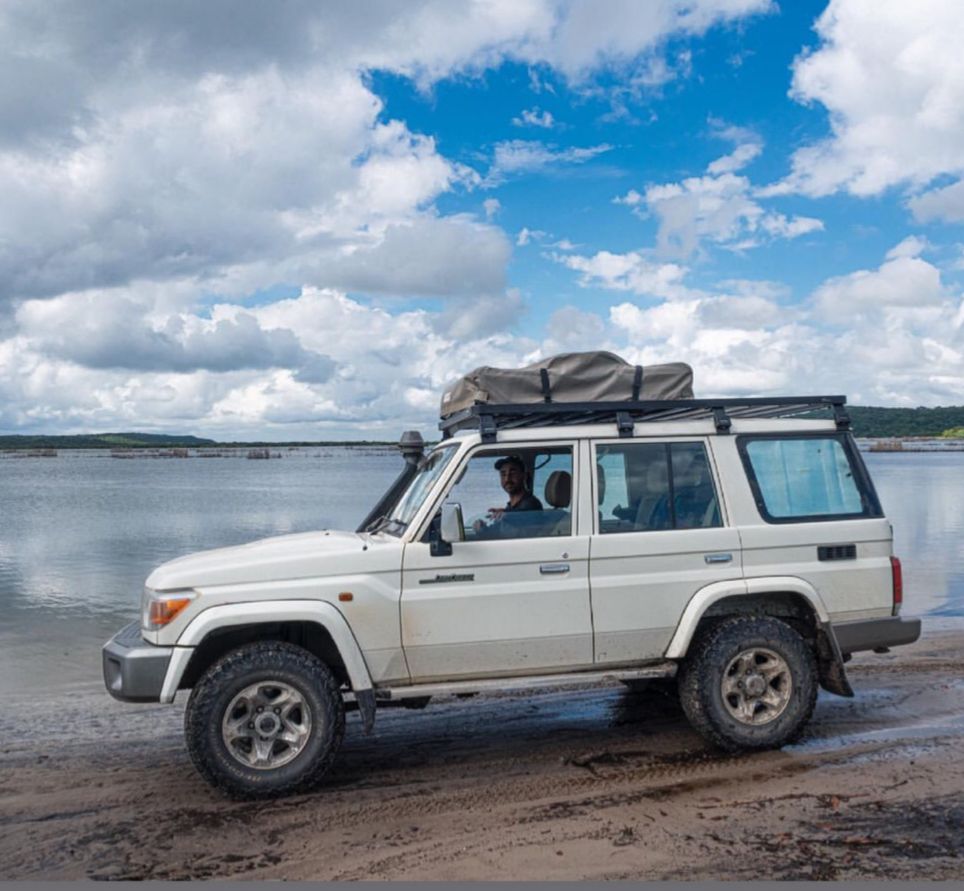
| Rooftop Tent (optional) | $20 – $35/day | N/A |
Note: A driver is highly recommended for first-time visitors to Uganda. Drivers double as local guides and navigators and are especially helpful in Kampala’s complex traffic and when tracking difficult terrain in the parks.
What’s Typically Included in the Rental
- Comprehensive vehicle insurance (within Uganda)
- 24/7 roadside assistance
- Spare tire and basic tools (jack, wheel wrench)
- First aid kit and fire extinguisher
- Vehicle recovery boards (on most Land Cruisers)
- GPS / offline maps (some companies)
- Unlimited mileage within Uganda (confirm with your company)
- Cross-border letter to Rwanda (confirm this in advance)
What’s NOT Typically Included
- Fuel (you pay for all fuel used)
- National park entry fees
- Gorilla or chimpanzee trekking permits
- Rwanda entry insurance (COMESA Yellow Card — additional cost)
- Driver accommodation and meals (if you hire a driver, you cover their lodging)
- Parking fees in Kampala or Kigali
- Traffic fines incurred during the rental
How to Book Your 4×4 Rental
When to Book
Uganda’s peak tourism seasons (June–September and December–February) see high demand for 4×4 rentals, especially Land Cruiser V8s and Prados. Book at least 4–8 weeks in advance during peak season. For gorilla trekking permit integration (where the company also holds your park permits), booking 3–6 months ahead is strongly advised.
Self-Drive vs. Hired Driver
| Self-Drive | With Hired Driver | |
| Cost | Lower daily rate | Higher daily rate + driver meals/accommodation |
| Navigation | Use offline GPS (Maps.me, OsmAnd) | Driver knows all routes |
| Flexibility | Full schedule control | Slightly less spontaneous |
| Safety | Need Uganda driving experience | Driver handles difficult terrain |
| Language | English widely spoken | Driver assists with local communication |
| Ideal For | Experienced 4×4 drivers with East Africa knowledge | First-timers, families, comfort-focused travelers |
Checklist Before Signing the Rental Agreement
- Confirm cross-border authorization letter is included
- Verify COMESA Yellow Card insurance (or arrange purchase at border)
- Check the vehicle’s condition thoroughly — photograph all existing scratches and dents
- Test four-wheel drive engagement (both 4H and 4L)
- Confirm spare tire is inflated and recovery kit is present
- Check that GPS/offline maps are loaded and functional
- Clarify one-way drop-off fee and location in writing
- Confirm fuel policy (full-to-full vs. same level)
- Ask for the 24/7 emergency contact number
- Confirm mileage limits (if any)
Road Conditions & Driving Tips
Key Road Conditions by Segment
- Kampala → Masaka (via Entebbe Expressway): Excellent tarmac; heavy traffic in Kampala. Allow 2–3 hours.
- Masaka → Mbarara: Good paved road; watch for trucks and boda bodas (motorcycles).
- Mbarara → Kabale: Paved but with steep mountain sections and sharp bends. Scenic and rewarding.
- Kabale → Bwindi (Buhoma or Rushaga): Unpaved red murram road with steep descents. Requires 4×4, especially in the rainy season (March–May, October–November).
- Kabale → Katuna Border: Well-paved. 30 minutes from Kabale.
- Kisoro → Cyanika Border: Steep mountain road, narrow in places. Excellent 4×4 required.
- Kigali (Rwanda): Well-maintained roads within the city; driving is calmer than Kampala.
Driving Tips for Uganda
- Drive on the left side of the road.
- Speed limits: 80 km/h on highways, 50 km/h in towns. Speed cameras are increasingly common.
- Avoid driving at night — unmarked vehicles, pedestrians, and livestock on roads are serious hazards.
- Carry cash (UGX and USD) for fuel outside major towns; many rural fuel stations do not accept cards.
- Use offline maps (Maps.me, Google Maps offline) — data can be unreliable in rural southwestern Uganda.
- Engage 4WD before entering park tracks, not after you get stuck.
- Slow down on speed bumps (rumble strips) — they are numerous and often unmarked in towns.
Driving Tips for Rwanda
- Drive on the right side of the road — Rwanda switched from left to right in 2009 as a Ugandan driver, this is the most important adjustment.
- Traffic laws are strictly enforced in Rwanda. Wearing seatbelts is mandatory.
- Plastic bags are banned in Rwanda — do not bring them across the border.
- Mobile phones while driving are strictly prohibited.
- Kigali has well-marked roundabouts; follow road signs carefully.

Fuel Costs and Availability
Both Uganda and Rwanda use diesel as the primary fuel for 4×4 vehicles. Fuel is generally available at major towns along your route, but plan ahead for remote areas.
- Uganda fuel price: Approximately UGX 5,000–5,800 per litre (USD ~$1.30–$1.55) for diesel.
- Rwanda fuel price: Approximately RWF 1,300–1,500 per litre (USD ~$1.10–$1.30) for diesel.
- A Toyota Land Cruiser V8 consumes approximately 14–18 litres per 100 km on mixed terrain.
- Fill up in Kabale before heading to Bwindi — fuel availability near the park is limited.
- Fill up before crossing into Rwanda if your tank is low; border area options are limited.
- Carry a 20-litre jerry can of fuel if your route takes you through Bwindi, Mgahinga, or remote park areas.
Frequently Asked Questions
Can I rent a 4×4 in Uganda and return it in Kigali?
Yes, most established car rental companies in Uganda offer one-way rentals with drop-off in Rwanda. You will pay a one-way drop-off fee (typically USD $150–$350). Always confirm this arrangement before booking and ensure it is written into your rental contract.
Do I need a special license to drive a 4×4 in Uganda?
Your national driver’s license is acceptable, but an International Driving Permit (IDP) is strongly recommended alongside it. Uganda and Rwanda both recognize IDPs. You must have held a valid license for at least 2 years and be at least 23 years old with most rental companies.
Is it safe to self-drive Uganda to Rwanda?
Yes, the route is well-traveled and generally safe. The main safety considerations are driving at night (avoid it), road conditions in park areas (always 4×4), and Kampala city traffic. Most travelers who plan well report a smooth, enjoyable journey.
What happens if the vehicle breaks down in Rwanda?
Most rental companies have an emergency number and either have agents or partner garages in Kigali. The rental contract should specify how breakdown assistance works across the border. Confirm this before departing.
Can I take the vehicle to Congo (DRC) as well?
No. Uganda car rental companies do not permit their vehicles to enter the DRC due to security and insurance restrictions. Rwanda is as far as most companies allow in that direction.
How long does it take to cross the Uganda-Rwanda border?
The Katuna/Gatuna crossing typically takes 30–60 minutes for tourists in a private vehicle with all documents in order. The Cyanika crossing can take slightly longer but is less busy. Allow at least 90 minutes in your schedule to account for queues.
Is a pop-up roof 4×4 available for the Rwanda drop-off route?
Yes, pop-up roof Land Cruiser V8s are available for this route and are ideal if you plan game drives in Queen Elizabeth or any Ugandan savannah park. Confirm availability and the additional cost (typically USD $20–30 per day extra) when booking.
Conclusion
A 4×4 self-drive from Uganda with a drop-off in Rwanda is one of East Africa’s great road-trip adventures. It combines wildlife encounters, mountain scenery, cultural immersion, and the thrill of a genuine overland journey. With the right vehicle, the correct documentation, and a rental company that understands cross-border logistics, the experience is smooth, safe, and unforgettable.
Whether you choose a Toyota Land Cruiser V8 for a full safari loop through Bwindi and Queen Elizabeth, or a simpler Kabale-to-Kigali run via the Katuna border, the key is preparation: book early, get your cross-border letter, sort your COMESA insurance, and plan your fuel stops. Rwanda’s clean cities and excellent roads make for a satisfying end point to an unforgettable Ugandan adventure.
