
4×4 Land Cruiser Prado with Pop-Up Roof
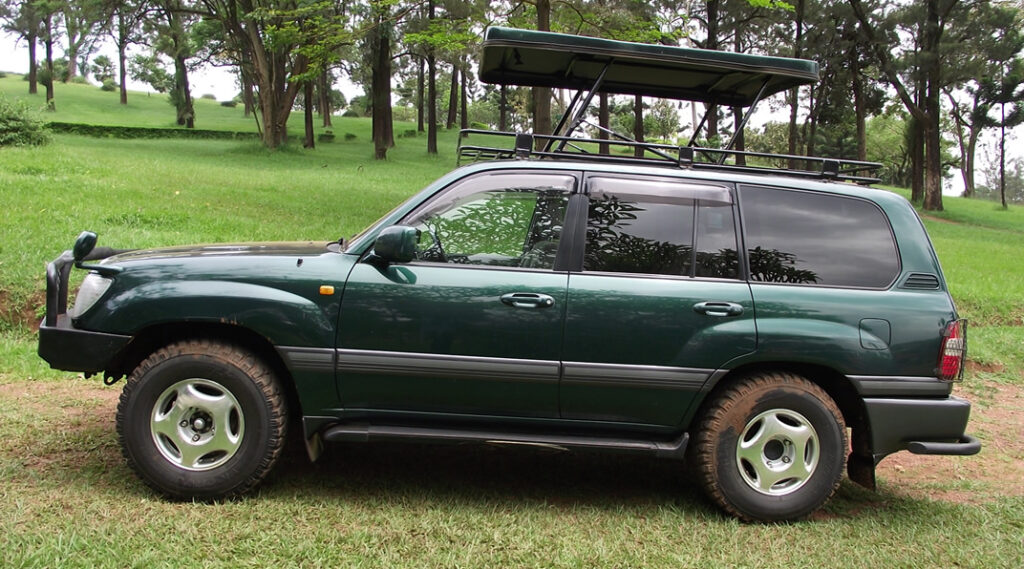
4×4 Land Cruiser Prado with Pop-Up Roof, Few vehicles are as closely tied to the African safari as the Toyota Land Cruiser. Among the Land Cruiser family, the Land Cruiser Prado with a pop-up roof has become the go-to choice for travellers who want the comfort of an SUV, the toughness of a true 4×4 and the unobstructed game viewing of a purpose-built safari vehicle — all in one package.
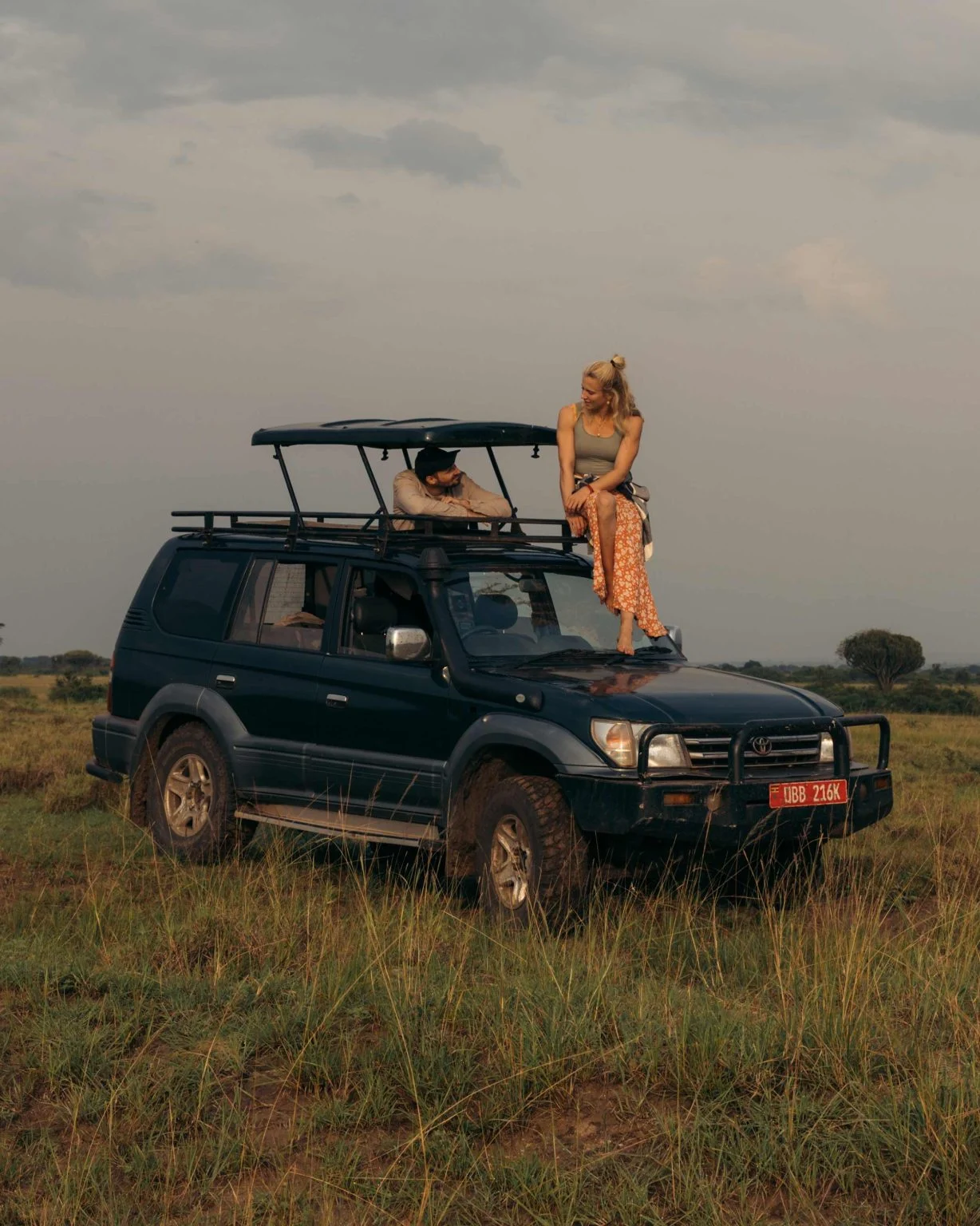
Whether you are tracking tree-climbing lions in Ishasha, following the Great Migration across the Serengeti, or watching elephants drink at the Nile in Murchison Falls, the Prado’s raised roof lets you stand up, rest your camera on the roof rim and scan the savannah in every direction without leaving the safety of the vehicle.

This guide covers everything you need to know before hiring a 4×4 Land Cruiser Prado with pop-up roof in East Africa: how the roof works, technical specifications, what is included in the rental, 2026 pricing, self-drive versus driver-guide options, the best parks to take it to, a sample itinerary, rental requirements, cross-border rules and answers to the most common questions.
What Is a Land Cruiser Prado with Pop-Up Roof?
The Toyota Land Cruiser Prado is the mid-size member of the Land Cruiser line — smaller and more fuel-efficient than the Land Cruiser 200/300 or the heavy-duty 70 series, yet built on the same ladder-frame chassis with full-time four-wheel drive, a low-range transfer case and a center differential lock.
A pop-up roof (also called a raised roof, lift-up roof or safari roof) is a modification in which a large section of the vehicle’s steel roof is cut out and replaced with a hinged canopy. When the canopy is raised, passengers can stand up through the opening to view and photograph wildlife. Side panels — usually canvas or mesh — keep out insects and sun while maintaining airflow. When lowered, the roof seals the vehicle for driving on the highway or in rain.
Pop-Up Roof vs Other Roof Types
| Roof Type | How It Works | Best For |
| Pop-up (raised) roof | Canopy lifts on struts; passengers stand inside a shaded, enclosed viewing area | All-round game viewing with shade and rain protection |
| Open hatch / sunroof | Single small opening, usually above the front row | Occasional viewing; one or two people at a time |
| Rooftop tent | Folding tent mounted on roof rack for sleeping — not for viewing | Self-drive camping trips |
| Open-sided game vehicle | No roof or doors; tiered seating | Lodge-based drives inside concessions only (not road-legal for transfers) |
| Good to Know
A pop-up roof is for viewing, not sleeping. If you plan to camp, ask about a Prado fitted with a rooftop tent, or pair your pop-up Prado with ground tents and camping gear. |
Technical Specifications
Rental fleets in East Africa mostly run the J120 (2003–2009) and J150 (2009 onwards) Prado generations. Exact figures vary by model year and engine, but the table below reflects a typical safari-ready unit.
| Feature | Typical Specification |
| Model | Toyota Land Cruiser Prado TX / TZ / VX (J120 or J150) |
| Engine | 3.0L D-4D diesel, 2.8L GD-6 diesel, or 2.7L / 4.0L petrol |
| Drivetrain | Full-time 4WD with high/low range and centre diff lock |
| Transmission | Automatic (most common) or manual |
| Seating | 5 seats standard; some units with 7 (third-row jump seats) |
| Safari passengers | 4–5 recommended for guaranteed window and roof space |
| Fuel tank | Approx. 87 litres; many safari units add a long-range sub-tank |
| Fuel economy | Approx. 9–12 km per litre (diesel), lower on rough tracks |
| Ground clearance | Approx. 215–220 mm |
| Roof | Pop-up safari roof with canvas or mesh sides |
| Luggage space | Medium; soft bags recommended, roof rack on some units |
| Air conditioning | Yes (most fleet units) |
Benefits of the Pop-Up Roof
1. 360-Degree Game Viewing
Standing through the roof lifts your eye line well above the tall grass of the savannah, so you spot lions in the grass, leopards in trees and distant herds that are invisible from a seated window.
2. Better Wildlife Photography
The roof rim makes a natural, stable rest for a beanbag and long lens. You can shoot over the bonnet or behind the vehicle without opening doors — which is prohibited in most parks.
3. Shade and Weather Protection
Unlike an open hatch, the raised canopy shades your head and shoulders from the equatorial sun and keeps light rain off while you continue viewing.
4. Safety
Passengers remain inside the vehicle at all times. The roof can be lowered within seconds if animals come too close or the weather turns.
5. Everyone Gets a View
With four or five passengers, everyone can stand at once — no rotating turns at a single hatch.
Why the Prado Is Ideal for East African Safaris
- Proven reliability: Toyota parts and mechanics are available in every major town from Kampala to Arusha, Nairobi and Kigali.
- Comfort on long transfers: Coil-spring rear suspension and a refined cabin make the Prado noticeably smoother than the leaf-sprung Land Cruiser 70 series on long tarmac stretches.
- Real off-road capability: Low range and a center diff lock handle muddy murram roads, steep escarpments and black-cotton soil in the rainy season.
- Fuel efficiency: Cheaper to run than the larger Land Cruisers, which matters on 1,500–3,000 km safari circuits.
- Manageable size: Easier to drive and park in cities like Kampala and Nairobi, and less intimidating for first-time self-drivers.
- Versatility: Works equally well for self-drive, chauffeur-driven trips, lodge safaris and camping safaris.
Self-Drive vs Driver-Guide: Which Option Should You Choose?
| Factor | Self-Drive | With Driver-Guide |
| Indicative daily rate | USD 120–180 | USD 160–230 (vehicle + guide) |
| Freedom & privacy | Maximum — your own pace and route | High, but the itinerary is usually pre-planned |
| Wildlife spotting | Depends on your own skill | Expert eyes, radio network, animal behaviour knowledge |
| Navigation & border admin | You handle it (GPS, maps provided) | Handled by the guide |
| Stress level | Moderate — rough roads, city traffic | Low — sit back and enjoy |
| Guide accommodation | Not applicable | Usually included or a small daily allowance |
| Best for | Experienced drivers, adventurous couples | First-timers, families, photographers |
| Our Recommendation
If it is your first safari in East Africa, a driver-guide usually pays for itself in better sightings and less stress. Confident 4×4 drivers on a return trip will love the freedom of self-drive. |
What Is Included in the Rental?
Standard Inclusions
- Fully serviced Land Cruiser Prado with working pop-up roof
- Unlimited mileage (on most safari packages)
- Comprehensive insurance with standard excess
- Two spare tyres, jack, wheel spanner and tow rope
- Basic tool kit, fire extinguisher and first-aid kit
- Cooler box or 12V fridge (on most units)
- Phone charging ports (USB / 12V)
- Detailed road map and/or pre-loaded GPS
- 24/7 roadside assistance and breakdown support
- Free delivery and collection in Kampala or Entebbe (subject to booking)
Optional Extras
| Extra | Indicative Cost |
| Professional driver-guide | USD 40–60 per day |
| Camping kit (ground tents, mats, chairs, table, cookware) | USD 20–35 per day |
| Rooftop tent upgrade (where available) | USD 30–50 per day |
| Pocket Wi-Fi / local SIM with data | USD 5–10 per day |
| Binoculars and wildlife field guides | USD 5 per day |
| Child seat | USD 5 per day |
| Cross-border permit and documentation | USD 150–300 one-time (varies by country) |
| One-way drop-off fee (e.g. Kigali, Nairobi, Arusha) | On request — based on distance |
Land Cruiser Prado Pop-Up Roof Rental Prices (2026)
Rates depend on the season, rental duration, model year, and whether you choose self-drive or a driver-guide. The figures below are indicative and given in US dollars per day.
| Rental Duration | Self-Drive (per day) | With Driver-Guide (per day) |
| 1–6 days | USD 160–180 | USD 210–230 |
| 7–14 days | USD 140–160 | USD 185–210 |
| 15–29 days | USD 125–145 | USD 170–190 |
| 30+ days | USD 120 or less (negotiable) | On request |
What Affects the Price?
- Season: Peak months (June–September and December–February) see higher demand and fewer discounts.
- Fuel: Fuel is not included; budget roughly USD 1.30–1.60 per litre of diesel depending on the country.
- Insurance excess waiver: Optional super cover reduces your liability in case of damage.
- Delivery location: Delivery outside Kampala/Entebbe may carry a fee.
- Cross-border travel: Additional permits, COMESA insurance and road-user charges apply.
| Sample Budget: 7-Day Self-Drive for Two
Vehicle hire (7 × USD 150) — USD 1,050 Fuel (approx. 1,400 km) — USD 180–220 Camping kit (optional, 7 × USD 25) — USD 175 Park entry and vehicle fees — varies by park and nationality Estimated vehicle & fuel subtotal: USD 1,230–1,450 (excluding accommodation and park fees) |

Prado Pop-Up vs Other Safari Vehicles
| Vehicle | Passengers | Comfort | Off-Road | Indicative Rate/Day |
| Land Cruiser Prado pop-up | 4–5 | High | Very good | USD 120–180 |
| Land Cruiser 70 series (76/78/79) pop-up | 6–7 | Moderate | Excellent | USD 150–250 |
| Toyota RAV4 | 2–4 | Good | Fair (no low range) | USD 50–70 |
| Safari minivan (Hiace) pop-up | 6–8 | Moderate | Limited | USD 100–150 |
| Toyota Hilux double cab | 2–4 | Moderate | Very good | USD 90–130 |
The Prado sits in the sweet spot: far more capable than a RAV4 or minivan in the rainy season, yet more comfortable and economical than the extended Land Cruiser 70 series for small groups.
Best Destinations for a Prado with Pop-Up Roof
Uganda
- Murchison Falls National Park — Buligi game tracks for lions, giraffes and elephants; launch trip to the base of the falls.
- Queen Elizabeth National Park — Kasenyi plains game drives, Kazinga Channel cruise and the tree-climbing lions of Ishasha.
- Kidepo Valley National Park — Remote, wild savannah in the far north-east; a sturdy 4×4 is essential.
- Lake Mburo National Park — Zebras, elands and impalas just 4 hours from Kampala; perfect first or last stop.
Tanzania
- Serengeti National Park — Great Migration, big cats and endless plains made for the pop-up roof.
- Tarangire and Lake Manyara — Elephant herds, baobabs and tree-climbing lions.
- Ngorongoro Crater — Check current crater-floor vehicle rules with your rental company and the conservation authority before you go.
Kenya and Rwanda
- Maasai Mara National Reserve (Kenya) — Migration river crossings from July to October.
- Amboseli National Park (Kenya) — Elephants framed by Kilimanjaro, ideal from a raised roof.
- Akagera National Park (Rwanda) — Rwanda’s Big Five savannah park, easily combined with gorilla trekking in Volcanoes.
Sample 7-Day Uganda Safari in a Prado Pop-Up
| Day | Route | Highlights |
| Day 1 | Entebbe/Kampala → Lake Mburo NP | Vehicle handover, Equator stop, evening game drive |
| Day 2 | Lake Mburo → Queen Elizabeth NP | Morning walking safari, scenic drive via Mbarara |
| Day 3 | Queen Elizabeth NP | Kasenyi sunrise game drive, Kazinga Channel boat cruise |
| Day 4 | Queen Elizabeth → Ishasha → Kibale area | Tree-climbing lions, crater lakes of Fort Portal |
| Day 5 | Kibale → Murchison Falls NP | Chimp tracking (optional), long scenic drive north |
| Day 6 | Murchison Falls NP | Buligi game drive, Nile launch, Top of the Falls |
| Day 7 | Murchison → Ziwa → Kampala/Entebbe | Rhino tracking at Ziwa Rhino Sanctuary, vehicle return |
Pop-Up Roof Game-Viewing Etiquette and Safety
- Stand only when the vehicle is stationary or crawling. Sit down when moving faster than walking pace on bumpy tracks.
- Never climb onto or out of the roof. Leaving the vehicle in a park is illegal outside designated areas.
- Keep noise low and avoid sudden movements near animals.
- Lower the roof before driving on highways, through towns or in heavy rain.
- Keep arms and lenses inside when passing elephants, buffaloes or overhanging thorn branches.
- Stick to designated tracks — off-road driving is prohibited in most East African parks and can attract heavy fines.
- Respect sighting rules: limit vehicles at sightings and keep a safe distance from predators on a kill.
Rental Requirements
| Requirement | Details |
| Minimum age | 23 years (some companies require 25) for self-drive |
| Driving experience | At least 2–3 years with a full licence |
| Driving licence | Valid national licence; International Driving Permit recommended |
| Identification | Valid passport (copy provided at booking) |
| Security deposit | Refundable deposit or card pre-authorisation, typically USD 500–1,000 |
| Booking deposit | Usually 30–50% to confirm; balance on or before pick-up |
| Rental agreement | Signed agreement plus vehicle inspection checklist at handover |
Taking the Prado Across Borders
A Prado with pop-up roof can be driven from Uganda into Rwanda, Kenya and Tanzania, provided the rental company authorizes it in advance. You will typically need:
- Vehicle logbook (or certified copy) and owner’s authorization letter
- COMESA Yellow Card (regional third-party insurance)
- Temporary Import Permit issued at the border
- Valid passports and visas — the East Africa Tourist Visa covers Uganda, Rwanda and Kenya
- Road-user and foreign-vehicle fees payable at the border or online
| Important
Foreign-registered vehicles may face extra conditions in some Tanzanian parks. Always confirm cross-border permission, park-entry rules and any one-way drop-off fee before booking. |
Practical Tips for Your Prado Safari
- Inspect the roof at handover — check the struts, seals, canvas and that it locks firmly in both positions.
- Fill up whenever you can. Fuel stations are scarce near Kidepo, northern Murchison and parts of the Serengeti ecosystem.
- Pack soft bags rather than hard suitcases to maximize cargo space.
- Bring a beanbag for camera support on the roof rim.
- Carry cash in local currency for park gates, small towns and border fees.
- Avoid driving at night — livestock, pedestrians and potholes are hard to see.
- Wear neutral colors (khaki, olive, beige) and bring a hat and sunscreen for standing in the roof.
- Book early for peak season, as pop-up Prados are among the most requested vehicles.
Frequently Asked Questions
How many people can fit in a Land Cruiser Prado with pop-up roof?
Up to five passengers can travel comfortably, with four being ideal on a safari so everyone has a window seat and room to stand under the roof. Some units have seven seats, but the third row is cramped on long drives.
Can I sleep in the pop-up roof?
No. The pop-up roof is designed for game viewing. For camping, choose a Prado with a rooftop tent or add a ground camping kit.
Is the Prado good for self-drive in the rainy season?
Yes. Its full-time 4WD, low range and center diff lock make it well suited to muddy murram roads, though you should still drive cautiously and avoid flooded crossings.
Is fuel included in the rental price?
No. Fuel is paid by the client. Vehicles are usually handed over with a full tank and should be returned full.
Can I hire a Prado with a pop-up roof and a driver?
Yes. Driver-guides are available for an additional daily fee and are recommended for first-time visitors.
Can I collect the vehicle at Entebbe International Airport?
Yes. Airport delivery and collection is available and should be arranged when you book.
Can I drop the vehicle off in another country?
One-way rentals to Kigali, Nairobi, Arusha or Dar es Salaam are possible with advance arrangement and a drop-off fee.
What happens if the vehicle breaks down?
Contact the 24/7 support line. Depending on your location, a mechanic will be sent, a repair arranged locally, or a replacement vehicle provided.
Is the Prado better than the Land Cruiser 70 series?
For two to five travelers, the Prado offers more comfort and better fuel economy. The 70 series is better for larger groups, extreme terrain and heavy loads.
Conclusion
The 4×4 Land Cruiser Prado with pop-up roof combines Toyota’s legendary reliability, genuine off-road capability and the uninterrupted wildlife viewing that makes an East African safari unforgettable. It is comfortable enough for long transfers, compact enough for city driving, and capable enough for the remote tracks of Kidepo or the Serengeti.
Whether you choose to self-drive or travel with an experienced driver-guide, the Prado gives you the freedom to explore Uganda, Tanzania, Kenya and Rwanda on your own terms.
| Ready to Book Your Prado?
Contact 4×4 Car Rental for availability, a tailored quote and expert route advice. Well-maintained fleet • Transparent pricing • 24/7 roadside support • Airport delivery |
