
Car Rental Karatu
Car Rental Rental. Rent 4×4 Land Cruisers for self-drive or with a driver-guide for an unparalleled wildlife safari with the Big Five in Serengeti National Park, Lake Manyara, or Tarangire National Park in Tanzania.
Karatu, situated in northern Tanzania, is a lively town set within the stunning vistas of the Great Rift Valley. Karatu serves as an entry point to Africa’s most iconic safari sites, given its proximity to esteemed sights like as Serengeti National Park and Ngorongoro Conservation Area.
Exclusive rates for 4×4 car rentals from a leading 4×4 car rental Karatu. 4×4 Car Rental collaborate with the principal car rental companies in Karatu to assist you in securing optimal bargains and facilitating effortless 4×4 cars rentals in Karatu. Our 4×4 car in Karatu are conveniently available for pickup and return at several locations in Karatu Mto Wan bu, Makuyuni Arusha, Moshi, Dar es salaam Dodoma, Mwanza, Bukoba and other different destinations
Karatu is accessible year-round; however, since it is typically visited in conjunction with safaris in nearby National Parks, it is advisable to visit during the dry season from June to October. The unique geology of the Ngorongoro Crater facilitates consistent animal sightings throughout the year; but, from June to October, the shorter grass enhances visibility for spotting wildlife.
This holds true for Lake Manyara, however both parks transform into a verdant and lush landscape during the wet season. Particularly, Ngorongoro Crater can become somewhat congested during the dry season, making the wet season potentially more pleasant. Certain roads may become excessively muddy and hence impassable during the wet season; however, this should not detract from your overall safari experience.
How to get to Karatu From Arusha
Karatu is located in the Arusha District. easiest access is via car or bus from Arusha. The 150 kilometers on a good road will require little more than two hours. Kilimanjaro Airport (JRO) serves as the international airport for Arusha, located approximately 45 minutes from the city.
An economical alternative is to utilize a bus or dala dala. This process may need up to three hours and should range from 5000 to 7000 Tsh. These can frequently become congested, and the low cost often compromises comfort. It is preferable to board a bus that arrives before to nightfall for safety considerations.
If you are prepared to invest additional funds, a small aircraft to the Lake Manyara airstrip is also advisable. Coastal Aviation and Air Excel operate flights from Arusha to Manyara for approximately 100 US$, serving as a layover en route to the Serengeti. Be advised that this aircraft is likely departing from Arusha Airport, a minor local airport, instead of Kilimanjaro Airport, from which you may have come on an international flight. The distance from Manyara airfield to Karatu is around a 30-minute drive, either by taxi or by a service we can organize.
Can I explore the Serengeti on a self-drive safari?
Indeed, you may embark on a self-drive safari in the Serengeti. The Masai Mara and the Serengeti are among the most renowned safari areas globally, and independently touring these regions constitutes a remarkable trip. The majority of travelers access the area via the Naabi Hill Gate; however, caution is advised as the route to Seronera, where most lodges are situated, may be uneven due to washboard surfaces resulting from erosion. Maintain a consistent pace to traverse it seamlessly, circumventing superfluous jolts.
Although skilled driver-guides may accelerate, it is prudent to proceed at a measured pace, as speeding can complicate the drive and increase risk. For those inexperienced with self-driving safaris, it is advisable to build confidence and proficiency in parks such as Lake Manyara, Tarangire, or Ngorongoro prior to confronting the more demanding Serengeti. An alternative is to undertake your Serengeti self-drive with a local driver-guide, who will operate the vehicle and ensure your safe and worry-free journey to your destination.
When to visit Serengeti - a month-by-month guide
The optimal periods for visiting the Serengeti are from January to February and from June to October. The Serengeti’s wildlife density provides an exceptional safari experience regardless of the season. The park’s expansive plains and temperate climate ensure that vegetation remains sparse for animal observation, while the area’s two brief rainy seasons, occurring from November to December and March to April, are never disagreeable.
Traveling to the Serengeti between January and March
From January to March, the Serengeti experiences typical wildlife migrations. This season signifies the assembly of wildebeest and zebra in the Ndutu region, located in the southeastern quadrant of the park—a favorable location for self-drivers from Arusha. Subsequent to the brief precipitation in early November, the herds go to the short-grass plains, partaking in the verdant, nutrient-rich grasses. During these three months, the bulk of wildebeest calves are born, peaking in February, coinciding with the highest concentrations of predators.
Journeying to the Serengeti between April and June
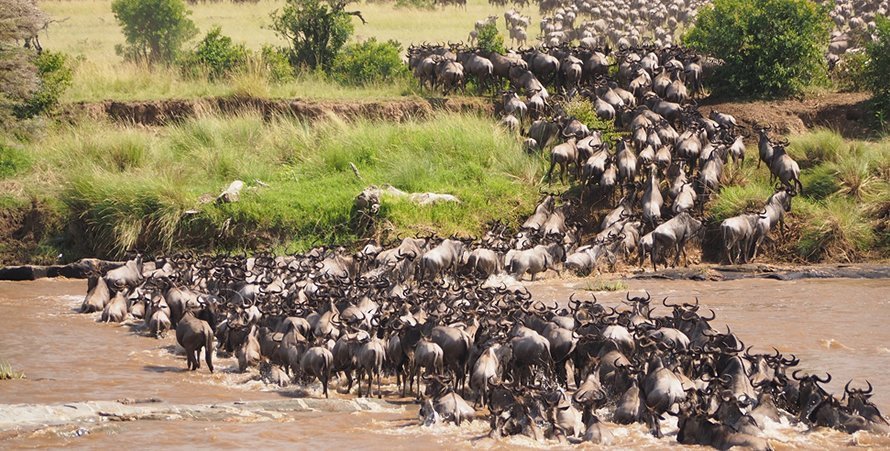
With the onset of April, the Serengeti witnesses a reduction in tourist attendance due to heightened humidity and sporadic heavy precipitation during May. June signifies the commencement of the dry season, being the optimal period for visitation prior to the high safari season. This phase is crucial for the Great Migration, when the wildebeest commence a northward trek of up to 40 km. The audacious crossing of the crocodile-infested Grumeti River occurs from June until early July, with the initial herds encountering greater peril. Consequently, it may take several weeks from the arrival of the initial wildebeest at the southern riverbanks for the crossing to commence. Numerous wildebeest assemble by the riverside, a remarkable spectacle! Given the Western Corridor’s considerable distance from the main entrance of the Serengeti, we advise utilizing our driver-guides for exploration of this area of the park.
Traveling to the Serengeti between July and September
A multitude of travelers converge in the Serengeti from July to September to observe the Great Migration. August is the zenith of the season and is regarded as the optimal period to observe the dramatic river crossings from the northern Serengeti to the Masai Mara. You will probably observe several of Africa’s large felines engaged in hunting activities! September continues to be vibrant in the Serengeti, especially at the Kenyan and Tanzanian borders. The herds cross the Mara River in smaller factions this month, while the southern regions of the park provide a more tranquil refuge.
Traveling to the Serengeti between October and December
Despite the migration of herds into Kenya in October, the Serengeti continues to offer exceptional wildlife viewing opportunities. November heralds the onset of the “short rains,” signaling a subdued, off-peak season. The precipitation stimulates new grasslands in the southern regions, attracting herbivores. It is an opportune moment for travelers to capitalize on reduced accommodation rates. By the conclusion of November, the wildebeest herds commence their southerly migration into the Lobo region of the Serengeti.
Understanding the travel durations is essential for a seamless journey. Here is an analysis:
Arusha to Karatu (last town for provisions): 140 km in around 3.5 hours
The distance from Karatu to Loduare Gate (entry to the Ngorongoro Conservation Area) is 15 kilometers, which takes around 30 minutes to traverse.
Distance from Loduare gate to Ngorongoro Crater entrance: 15 km, approximately 1 hour travel time.
The distance from the Ngorongoro Crater entrance to Naabi Hill Gate (Serengeti entrance) is 85 km, which takes around 2 to 3 hours.
Naabi Hill Gate to Seronera (central Serengeti): 60 kilometers in approximately 1 hour
Seronera to Lobo Ranger Post: 80 kilometers in approximately 2 hours
The journey from Seronera to Arusha takes 9 to 10 hours; it is not advisable to do this drive in a single day due to potentially poor road conditions.
Be advised: The final gas station prior to Serengeti is located in Karatu, and there exists an emergency station at Seronera, but with elevated fuel rates. Our safari vehicles feature an extensive gasoline capacity (2x 80L), ensuring ample fuel for several days of game viewing without the concern of depletion.
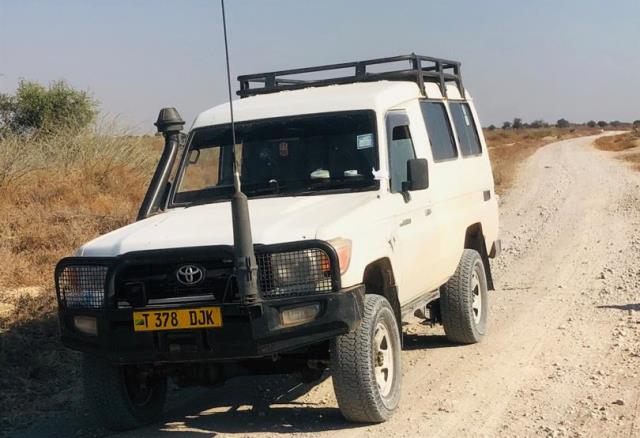
Guided or self-drive safari?
Travelers occasionally concern themselves about the likelihood of encountering large felines and other predators on a self-drive safari. Engaging a qualified guide can significantly enhance your likelihood of observing wildlife. Guides, via walkie-talkies, communicate to facilitate the location of animals. This concerted effort has a drawback—numerous vehicles follow one another’s routes, leading to a congested and rushed experience, especially during the peak season. This may undermine the authentic nature of the wilderness experience.
Embarking on a safari resembles a game of concealment and discovery between oneself and the wildlife. The sensation of gratification experienced upon their discovery is unparalleled. We believe there is a distinct pleasure in individually exploring the Serengeti, locating animals at your own discretion and establishing your own pace. Consequently, we will consistently advocate for reserving a self-drive expedition rather than participating in an organized tour.
Camping and accommodations in the Serengeti
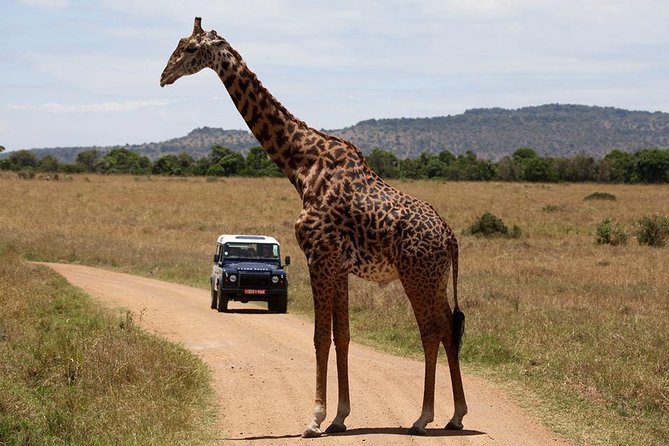
A visit to the Serengeti is costly. The most economical accommodation option is self-camping at public campsites. Adjacent to Seronera Wildlife Lodge, there exists a collection of seven campgrounds, including one public campsite situated in the northeast, near the Lobo region. During the migration, the latter serves as an excellent camping location.
The Seronera campgrounds have an extensive enclosed cooking space and a distinct covered dining area. In our view, the majority of these campsites lack distinctiveness and are mostly designed to accommodate inexpensive group safari vacations. In peak season, anticipate sharing the campsite with a minimum of 40 more campers. Fortunately, we did not encounter this in the other safari parks in Tanzania. Additional details regarding camping in Tanzania are available in our camping guide.